Christian family in India leaves ancestral home after mob of 150 attacks: “Wherever we live, we will live with Jesus”
In Chhattisgarh, three families were beaten with sticks for refusing to return to Hinduism. Vikas Salam's family would rather lose land and home than renounce Christ.
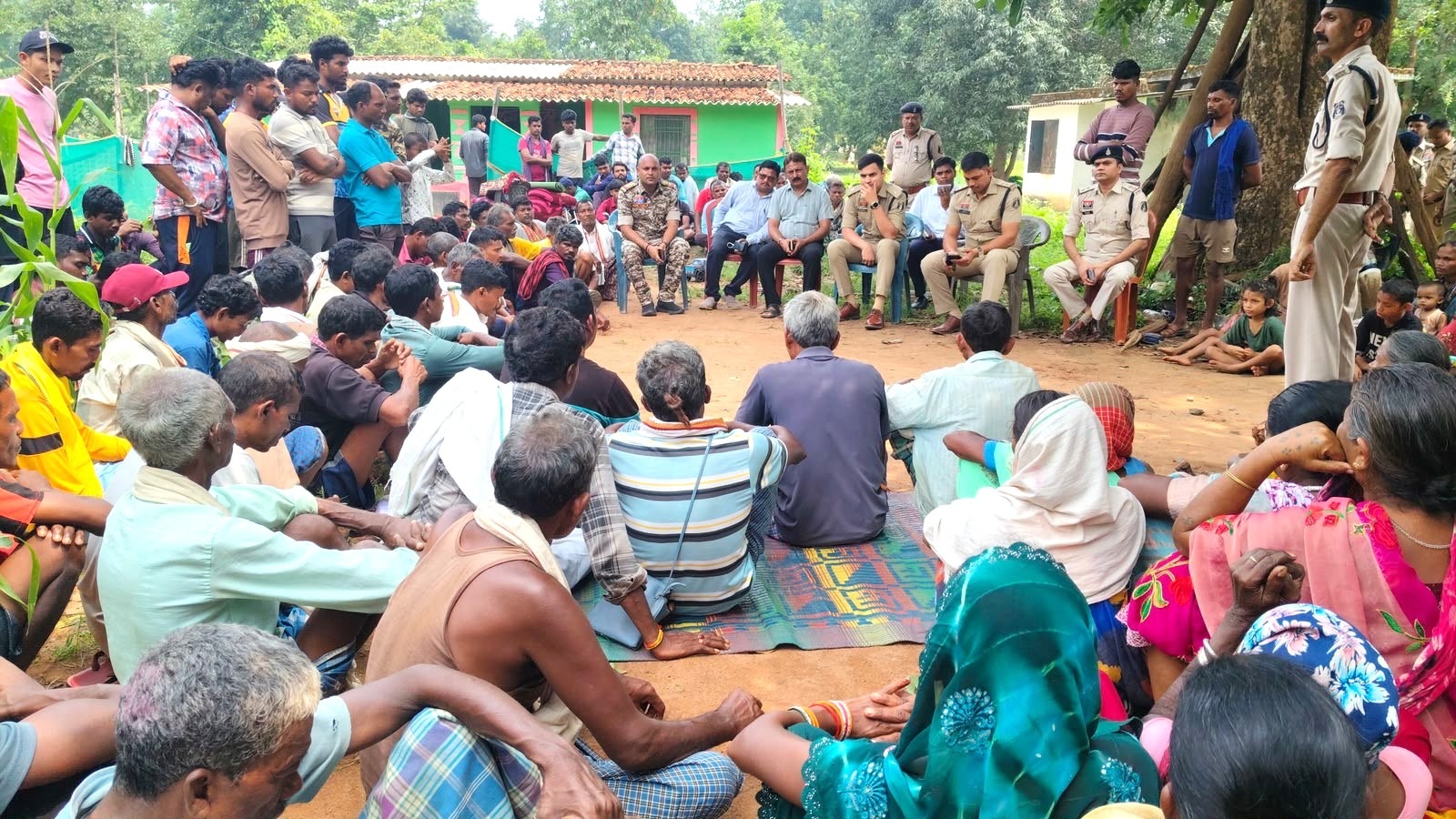
Vikas Salam, 24, was rolling on the grass in pain when police finally picked him up and drove him to the hospital. Back in Bhandardigi, a village in Kanker District in India's Chhattisgarh state, were his wife, his uncle, his cousin and an 11-year-old boy who could no longer walk. All of them had been beaten with sticks on Sept. 21 by a mob of about 150 villagers.
Five weeks later, Salam's family has decided to leave their home, their land and their ancestral village rather than renounce Christ. The account comes from Morning Star News, a U.S. outlet that covers persecuted Christians, and rests on Salam's own testimony. The outlet describes the attackers as Hindu extremists.
“We have been following Jesus for the last 10 years,” Salam told Morning Star. “The villagers told us to either return to the Hindu fold or leave the village.”
The last Christians in Bhandardigi
The three families attacked, 18 relatives in all, were the last Christians left in the village. Salam said other Christian families there, all of tribal background, had already been forcibly converted to Hinduism. Pressure on the remaining households has built for years and worsened over the last three, he said, stirred up by local extremists.
Salam and his relatives first turned to Christ after receiving physical healing. Reading the Bible, he said, they learned that the Lord gives eternal life. He also described how life changed: before, there was drinking, fighting and arguing.
The believers used to worship at Salam's house. When neighbors stopped them, the family built a room on their own farmland outside the village. The villagers followed them there, too.
Six summonses in eight days
The escalation, as Salam tells it, has dates. On three straight Sundays starting Sept. 6, a mob broke up the Christians' gathering. Between Sept. 13 and 20, the families were summoned six times before the village head and council.
Each time, Salam said, they were cursed at and threatened with beatings, a boycott and expulsion unless they accepted Hinduism. His answer was the same all six times: wherever they lived, they would live with Jesus Christ, and if they could not stay, they would spend their lives elsewhere without renouncing their faith.
The family was also barred from collecting the monthly government-subsidized ration of rice, wheat and cooking oil that they depend on. On Sept. 20, the day before the attack, a worship service was disrupted again.
The attack of Sept. 21
The next day, Salam said, about 150 people carrying sticks walked into the area where the three families lived, with no warning. “They spared nobody,” he said. He took the worst of it: he was strangled, slapped and kicked, and hit on the back until a stick broke. His uncle, Somji Nureti, 40, was choked by the throat. His cousin Pradeep Uike, 25, took blows to the back. Rohan Nureti, 11, was struck on the legs.
Salam broke away for a few minutes and called police before the mob dragged him back. The station is less than two miles away, but no one came. He escaped again and phoned the Kanker superintendent of police, warning that the Christians would be killed. Officers arrived right after that, he said.
According to Salam, the attackers did not let the Christians film the beating, and without video police took no action against anyone, even though the injuries were plain to see. Village elders cut in to say they had only slapped the family two or three times. Four people were hospitalized, including the 11-year-old, who could not walk.
At the hospital they were given painkillers and sent home. There, the family's belongings were lying on the road. Five weeks on, Salam still has body aches, hearing trouble and throat pain. When he rides a motorbike, the wind in his ear causes excruciating pain, he said.
“Do you want land or Jesus Christ?”
After the hospital, the village head, the council secretary, a head constable, magistrates, a land records officer, an additional superintendent of police and officers from three police stations gathered in the village. Salam said the whole group worked to talk the families into giving in.
His father, Ram Salam, 50, who sleeps in the field to guard the crops, was called in along with representatives of the other two households. Officials told them their farmland would be confiscated. “You want land or Jesus Christ? You have to choose one,” they said, according to Salam.
Ram Salam and the other two representatives gave in and agreed, on behalf of their families, to convert to Hinduism. “We have to save ourselves, our land and property,” the father told his son. The villagers also demanded a religious offering, and he had to give it.
Vikas Salam would not. “If we were willing to renounce Christ, there would have been no need for these high officials,” he said. “They came because we were not ready.” Since then, neighbors keep inviting him to join rituals, and he keeps declining.
A wave that did not start in Bhandardigi
The area is heavily tribal, and tribal peoples are not Hindus. But Morning Star reports that decades of campaigning by right-wing Hindu groups have blurred the line between tribal religion and Hinduism. Hindu nationalists call the conversion of tribal Christians “ghar wapsi,” or homecoming. Christian leaders call it forced conversion.
Bhandardigi is not an isolated case. On Oct. 24, another Christian family was evicted in Chindpal, also in Kanker, and International Christian Concern reported tin roofs torn off Christian homes in Sukma days earlier. In June, 26 families were forced out of the village of Bharanda and ended up living in the open under police protection, according to Barnabas Aid.
The legal landscape shifted this year. The state legislature passed the Chhattisgarh Freedom of Religion Bill on March 19, with severe penalties, up to life imprisonment, for conversions by force, fraud or allurement, UCA News reported. The text says a return to one's ancestral faith is not a violation. The governor signed it on April 7. Chief Minister Vishnu Deo Sai said conversions through inducement, pressure or misinformation had been hurting social harmony. Christian leaders reply that there is no evidence of widespread illegal conversion in a state where Christians are under 2% of roughly 30 million people.
The villages' side of the story also surfaces. In another Chhattisgarh case, a village council wrote to police that the families had left voluntarily and were banned from returning, according to Maktoob. The families describe violence and constant pressure. In Salam's account, no official in Bhandardigi is quoted giving a version of their own.
Nationally, Open Doors ranks India 12th among the countries where it is hardest to be a Christian, with a score of 84 out of 100. Converts bear the brunt, and tribal Christians face threats and forced reconversion, the group says. The United Christian Forum counted 834 attacks on Christians in 2024, up from 127 in 2014.
House, fields, persecutions
In Mark 10:29-30, Jesus says that anyone who leaves house, brothers, father, mother or fields for his sake and the gospel will receive a hundredfold now in this age, along with persecutions, and in the age to come, eternal life. The promise and the price share one sentence.
The Salam family is still in the village, under constant threat of another attack, waiting to leave. The neighbors are waiting for Vikas to give in, as his father did.
“We have decided to leave our land, our property, our home and our ancestral village,” he said. “We will live in a far-off city, where we have freedom to attend church and worship Jesus, even if we must work as a daily wages' laborer.”