Four times a week, Iranians log into a virtual room that appears on no map. There is no building, no sign, no bell. There is a private, closed platform where people worship, pray and study the Bible.
SAT-7, the Christian satellite broadcaster, offers four live online worship and teaching sessions each week for Iranians, on secure private platforms, SAT-7 USA president John Cerniglia told Mission Network News. According to Guiame, which published the account Oct. 29, each session draws 30 to 50 people.
SAT-7 also airs 250 television episodes about Jesus into Iran every week. Another 70 people contact the ministry every day online to go deeper into the Gospel.
Why the church moved onto a screen
In Iran, a Muslim who follows Christ is treated by the state as a threat. Converts, seen as “apostates” from Islam, bear the brunt of the persecution, according to Christian Solidarity International, a Christian human rights group based in Zurich.
The historic Armenian and Assyrian churches are recognized, but under tight limits. They cannot hold services in Farsi or evangelize Muslims, and the Farsi ban exists precisely so that Farsi speakers cannot follow their worship or join their communities. With no open church available to them, converts meet in homes. CSI reports that authorities treat attending or leading a house church as a national security crime, carrying up to 10 years in prison. Security forces often raid meetings and seize Bibles.
There is no reliable census. Estimates range from 300,000 to 1 million Christians in the country, most of them in the underground church, according to Mission Network News. Open Doors ranks Iran 10th on its 2026 World Watch List.
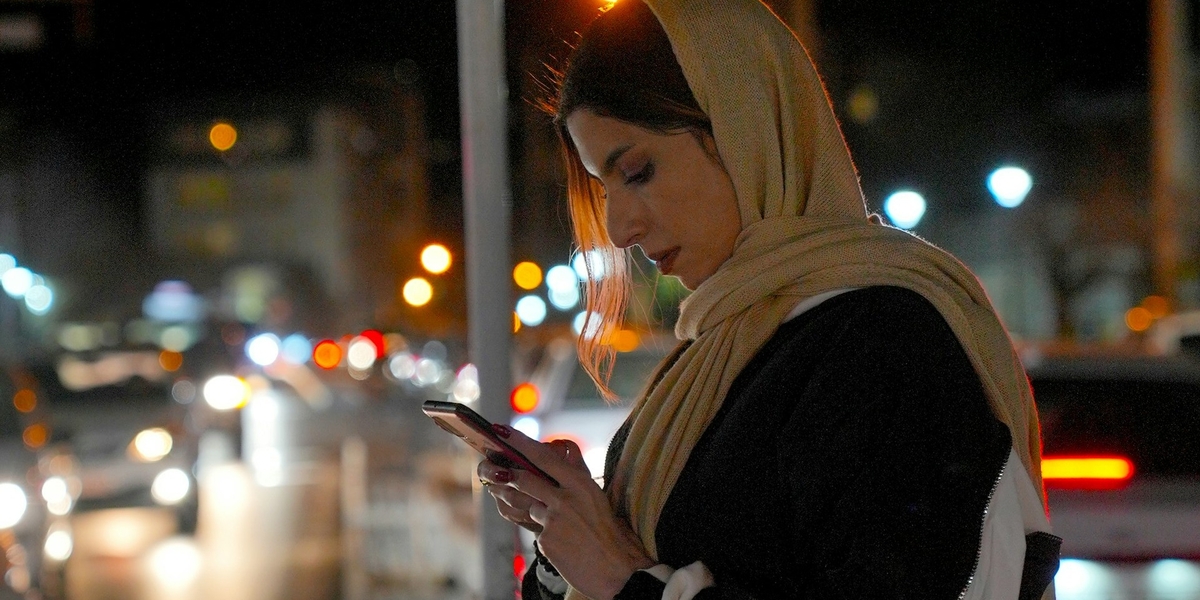
Cristãos iranianos encontram nos cultos online uma forma de fortalecer a fé em meio à perseguição. (Foto representativa: Rafiee Artist/Unsplash) Photo: Guiame
Inside the virtual room
The door is not open to just anyone. Panayiotis Keenan of SAT-7 PARS, the network's Farsi-language channel, told MNN that callers with questions can be steered to secure Zoom meetings. After careful vetting to make sure they are not government informants, some are welcomed into Christian communities.
There is a daily gathering, too. After the government cut the internet on Jan. 8, SAT-7 PARS launched “Standing in the Gap.” The one-hour sessions run Monday through Friday, 2:30 to 3:30 p.m. Iran time, with prayer, worship and Bible readings. A care team attends each session, and the Zoom link goes out daily on WhatsApp and social media.
The network says it reaches roughly half a million viewers inside Iran on a given day and hears from about 50 of them daily. Its Farsi channel broadcasts 24/7 by satellite directly into Iran, bypassing government censorship. Cerniglia says satellite remains the most reliable route because the government can easily block the internet.
Ellen, a SAT-7 viewer, wrote that she had come through days of sadness and unanswered questions, and that after three days of webinars she felt renewed and almost back to normal life. Fatemeh, an Iranian Christian who spoke to Open Doors UK, is frank about the cost. Online meetings come with problems, from bad connections to the risk of surveillance, but she says they are “vital for us.” In April, during the first blackout, Open Doors reported that believers avoided even the words “prayer,” “church” and “fellowship” in conversation.
“The reality of the war is drawing people closer to Christ,” Cerniglia says. He says Iranians tell him that sacrifice and suffering are not temporary, and that the Bible itself teaches believers to expect them. The Gospel these groups open on screen records Jesus' promise in Matthew 18:20: where two or three gather in his name, he is there among them.
Two blackouts and an internet that returns in fits
The connection has never been guaranteed. Authorities cut the internet Jan. 8 during anti-government protests, and a near-total shutdown followed Feb. 28 after war broke out involving Iran, Israel and the United States. The second blackout lasted 88 days, with international connectivity beginning to return May 26, Iran International reported.
During that stretch, believers were cut off from pastors abroad, online worship and Bible courses, Open Doors USA reports. Rahab, an Iranian woman, described the return of the signal: the night before, she had found and watched a sermon in Farsi on social media, and she felt revitalized. The organization says names were changed for security.
Afshin, a church leader in Iran, spoke of a wave of depression brought on by the blackout and by the mass killing of protesters in January. He calls being back online a “temporary medicine.” Pressure has not eased. “During the ceasefire period, security crackdowns against Christians have increased,” said Ahmad, a convert in northeastern Iran. Analysts and activists fear a national intranet that would wall Iranians off from the global web.
The “hostile” list and the government's version
On July 15, Article 18, which documents the persecution of Christians in Iran, reported that the Ministry of Intelligence had put Christian broadcasters on a list of “hostile” media. The list names SAT-7, Nejat, Seven and Mohabat TV alongside BBC Persian and Iran International, plus journalists and opposition figures such as Reza Pahlavi, Masih Alinejad and Shirin Ebadi. The ministry says any “cooperation,” including sending photos or videos, could lead to prosecution under the espionage law passed after the 12-day war with Israel in 2025. Open Doors says anyone who watches, contacts or shares the content may now fear being accused.
At least five Christians have already been sentenced under the law, with prison terms totaling more than 40 years. Article 18's Fred Petrossian explains that “hostile,” in official usage, means anyone the government sees as combative toward the system. He calls the concept vague and says that in practice it “has no boundaries.”
The authorities' account, as recorded by Article 18, is that these Christians are “Mossad mercenaries.” The Ministry of Intelligence says they were “trained abroad” by churches in the United States and Israel and acted “under the guise of the Zionist Christian evangelisation movement.” More than 50 Christians were rounded up in the month after the 2025 war on that accusation.
Edwin Abnous, executive director of Heart4Iran, whose Mohabat TV has broadcast into Iran for 20 years, says the regime claims the Christian channels preach Zionist Christian theology. He says any mention of Israel, which comes up often in the Old Testament, gets labeled espionage. Abnous calls the list a violation of religious freedom and expects less contact from inside the country: “Our audience will be much more careful.”
What comes next
Iran's parliament is reviewing an internet regulation bill. Article 6 would allow access to be suspended or restricted on orders from judicial authorities or other competent bodies, without naming them. Iran International reported the text Oct. 28.
The sessions, meanwhile, go on. Cerniglia closes his account with a request: “Pray that God will provide, will be a refuge and a shield for our brothers and sisters in Iran.”
The interior of Saint Sarkis Cathedral, an Armenian Apostolic church in Tehran. Historic churches are recognized but barred from holding services in Farsi. Photo: Diego Delso, CC BY-SA 4.0, Wikimedia Commons