Noah’s Ark Hunters Testing for Wood After Drilling Mission - Newsweek featured image Photo: Newsweek
Not yet confirmedUnder investigation. Here is what is known and what still needs proof.
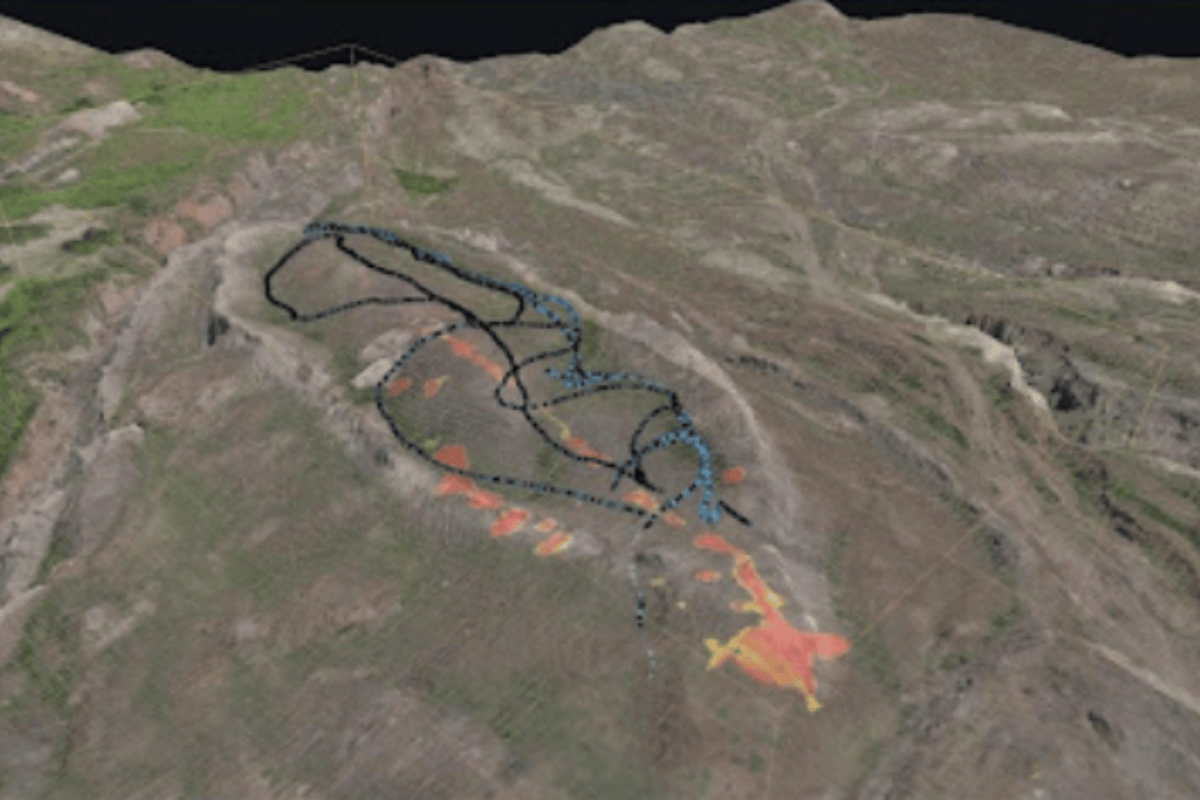
On the steep slopes of the Doğubayazıt district in Turkey's eastern Ağrı province, roughly 20 miles south of Mount Ararat, an international team of archaeologists, geologists, and soil scientists has drilled deep into a 515-foot-long geological feature known as the Durupınar Formation. The structure's uncanny resemblance to the hull of a massive buried ship has drawn searchers and scholars for over six decades. During field operations in 2026, core drilling equipment retrieved small fragments of charred wood extracted nearly 30 feet beneath the surface.
The discovery was first made public on October 15, 2026, at the 8th International Mount Ararat and Noah's Ark Symposium in Ağrı. Prof. Dr. Cenker Atila of Sivas Cumhuriyet University, who leads the officially permitted archaeological investigation, told attendees that his team had recovered burnt wood from deep inside the formation. The samples were dispatched immediately to specialized laboratories for carbon-14 dating, wood species identification, and chemical screening for ancient pitch and tree resin. To date, no laboratory results have been published or subjected to independent peer review.
While the recovery of organic wood deep within the formation marks an intriguing milestone, researchers urge scientific caution. Andrew Jones, founder of the U.S.-based research group Noah's Ark Scans, which collaborates with Turkish scientists under university oversight, told Newsweek that no lab results are in yet and the age of the material remains unestablished. Jones stressed that while the team is testing the hypothesis that the layers represent decayed vessel remains, the charred wood could just as easily come from an ancient shepherd's campfire built inside the earthwork for shelter centuries ago.
Subsurface core drilling strikes hard layer and charred fragments at 30 feet
The 2026 investigation employed a subterranean robotic device called a Gopher drone, engineered to extract deep core samples without wide-scale excavation. In early drilling stages at depths between 13 and 16 feet, the equipment's drill bit shattered against an exceptionally hard layer. Technicians noted two main possibilities for the obstruction: a dense block of natural rock embedded in debris, or a layer of heavily mineralized, petrified wood.
As core drilling progressed to depths reaching 65 feet across the interior of the boat-shaped outline, researchers retrieved organic-rich layers and the charred wood fragments located almost 30 feet deep. Reports from the İHA news agency and The Jerusalem Post quote Prof. Atila explaining that preliminary radiocarbon findings from France are expected within weeks, while comprehensive testing at Turkish universities will take roughly three months. A detailed report synthesizing physical cores and geophysical data is planned for spring 2027.
The burnt condition of the wood is significant for organic preservation. Charring dramatically reduces biological decomposition rates in moist soil, often slowing decay to less than 1% per year. This process allows cellular wood structures to endure for millennia underground. Researchers are examining whether the charring resulted from human activity, lightning strikes, or ancient volcanic events in the Ararat region.
Radar scans detect three-tiered internal structure masked against natural rock
Alongside core sampling, the 2026 expedition presented updated subsurface geophysical surveys. Dr. Khosrow Bakhtar, a defense scientist and founder of Bakhtar Research and Engineering LLC, conducted ground-penetrating radar scans calibrated to mask natural geological signatures. Presentations at the Ağrı symposium indicated that the processed radar images revealed organized linear patterns, internal chambers, and corridors incompatible with solid, homogeneous rock. "This is the most significant finding of 45 years of my career. It's not geologic related, because we masked all the geologic features," Bakhtar said.
Radar and electrical resistivity tomography surveys pointed to a internal structural arrangement consisting of three distinct levels beneath the surface. Prof. Atila tied the finding to Scripture, which calls for the ark to be built with lower, second and third decks (Genesis 6:16). "In our Holy Books, Noah's Ark had three levels; in our radar studies, we also identified a formation with three levels," he told reporters at the symposium. Notably, core drilling inside the formation did not encounter solid limestone or bedrock, contrasting with the geology of the surrounding terrain.
To cross-examine these findings, scientists drilled 12 test holes inside the ship-shaped outline and four control holes outside it. By comparing soil chemistry, mineralogy, and organic content between the interior cores and the surrounding valley, the team aims to establish whether the material originates from localized slope erosion or unique structural deposits.
A six-decade debate: from 1959 aerial photographs to geological evaluations
The Durupınar Formation entered public consciousness in 1959 when Turkish Air Force Captain İlhan Durupınar identified the boat-like contour while examining aerial survey photographs. In the 1980s, American explorer Ron Wyatt popularized the location, asserting that the shape held the petrified remains of Noah's Ark. His claims sparked widespread public interest but drew sharp criticism from mainstream geologists.
In 1996, geologists Lorence Collins and David Fasold published a landmark study in the *Journal of Geoscience Education* concluding that the Durupınar Formation is a completely natural rock structure. They argued that the boat-shaped ridge formed through folded limestone beds eroded by mudflows. Collins and Fasold maintained that alleged wood petrifactions and iron rivets identified by early searchers were merely natural limonite concentrations and iron-rich rocks.
Other geologists, including Andrew Snelling, suggested the structure formed during earthquakes in 1948 and 1978, which pushed up basement rock blocks draped in mudflow. In 2023, soil and rock analyses conducted by Istanbul Technical University and presented by Prof. Faruk Kaya of Ağrı İbrahim Çeçen University dated surrounding samples to between 3,500 and 5,000 years old. However, Prof. Kaya explicitly stated that soil age alone cannot prove the presence of an ancient ship.
Radiocarbon science and tests for ancient resin and pitch
Carbon-14 testing on the newly recovered wood fragments aims to establish when the original trees died and ceased absorbing atmospheric carbon. As radiocarbon testing laboratory Beta Analytic notes, living organisms maintain a constant ratio of carbon 14 with the biosphere; upon death, carbon exchange stops and the isotope decays at a known half-life rate. Measuring the remaining carbon 14 will clarify whether the wood dates to antiquity or a more recent historical era.
Laboratory work is also testing the samples for trace amounts of pitch and natural tree resins. Researchers consider this test relevant because of historical descriptions regarding vessel waterproofing methods. Nevertheless, scientists emphasize that identifying ancient wood deep underground does not inherently prove human construction, as organic debris naturally accumulates in soil deposits over centuries.
Definitive conclusions require peer-reviewed publication of sample depths, microscopic cellular analyses, and isotopic data. Until independent laboratories verify the findings, claims regarding the Durupınar wood remain working hypotheses.
Scripture references and the roadmap for ongoing research
For readers of scripture, the Durupınar site remains a subject of enduring interest due to its scale and geographic setting. Genesis records that Noah was instructed to build an ark of gopher wood and coat it inside and out with pitch (Genesis 6:14). The biblical narrative further notes that as floodwaters receded, the vessel came to rest upon the mountains of Ararat (Genesis 8:4).
The 515-foot length of the Durupınar Formation closely matches the 300-cubit dimension recorded in Genesis. However, scientific consensus and responsible research groups agree that dimensional alignment and shape do not constitute proof without physical artifacts showing clear human craftsmanship, such as joinery, timber framing, or period tools.
The research partnership between Sivas Cumhuriyet University and Noah's Ark Scans will continue laboratory testing throughout the winter. Subject to permit renewals by Turkish authorities, a second field season is planned for 2027 to deepen core drilling. The team has stated it has no immediate plans for large-scale excavation, focusing instead on rigorous lab testing to determine the true nature of the material recovered from deep within the earth.